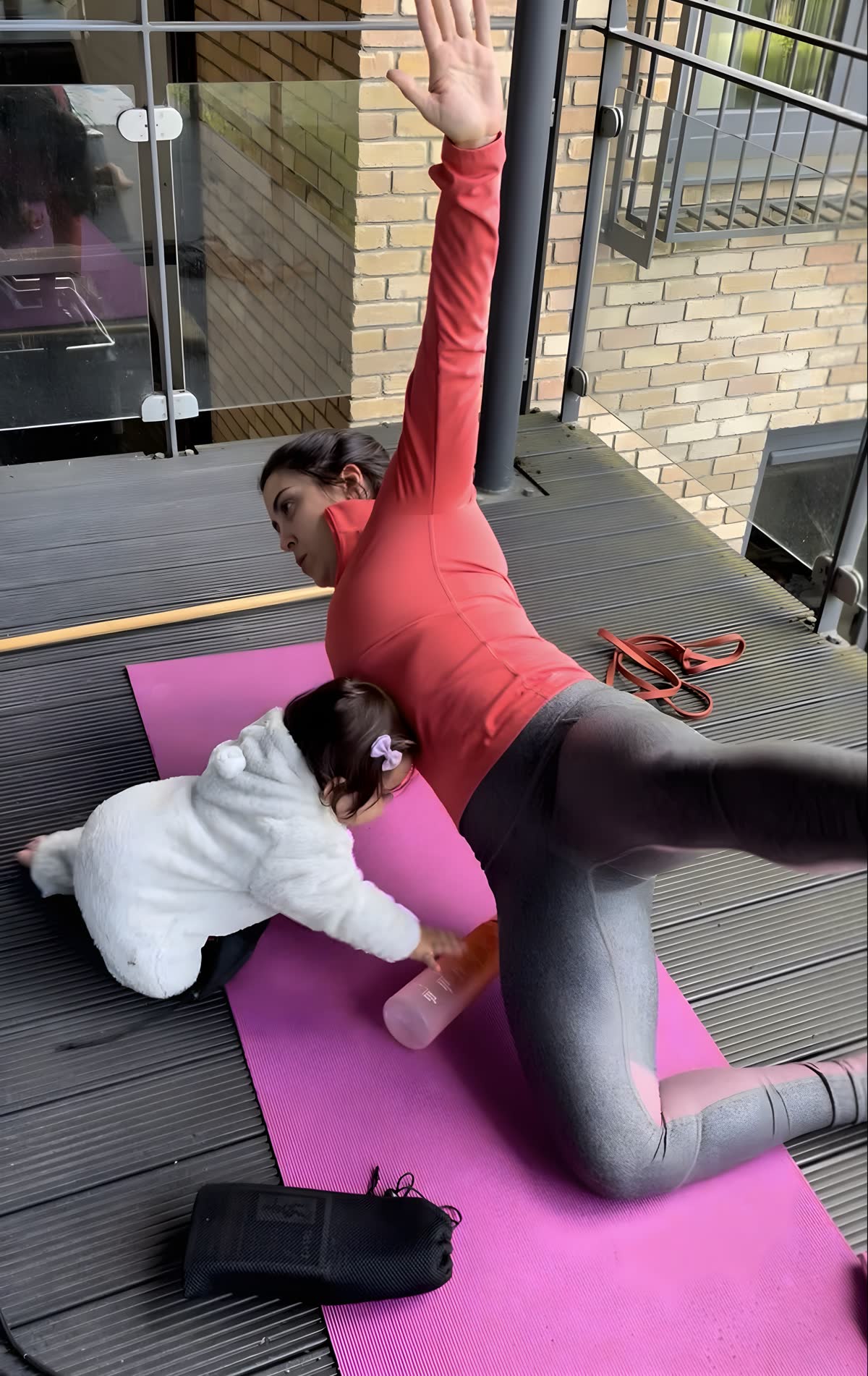
Starting strength training after birth doesn’t have to mean rushing back to the gym, chasing your old routine, or trying to “bounce back” by a deadline.
Quick answer: start with gentle, symptom-led strength work, not a full gym comeback. Walking, basic core awareness, pelvic floor work, squats to a chair, glute bridges, and light upper-body movements can all count when they match your stage and feel good during and after.
You don’t need a dramatic restart.
You need a starting point your body and your life can actually handle.
I understand this from real life, not just from coaching notes. When I was pregnant, I didn’t have a car, and the closest gym was a 40-minute walk away. That season shaped how I think about training for mums now: the plan has to work inside the life you actually have.
This article is general fitness education, not medical advice. Postpartum recovery is individual. Before starting or progressing exercise, check with your GP, midwife, or pelvic-health physiotherapist, especially if you have pain, leaking, heaviness, pressure, bleeding changes, dizziness, chest pain, severe fatigue, or any concern about your recovery.
The 6-week check isn’t a finish line
One of the biggest mistakes in postpartum fitness is treating the calendar as the main decision-maker.
The 6-week check is often talked about as if it’s a green light to “get back to normal.” But a 6-week appointment isn’t the same as automatic clearance for running, heavy lifting, high-impact classes, or a full training programme.
Your body doesn’t recover according to one universal timeline. A good postpartum strength plan should look at your stage, your symptoms, your birth recovery, your sleep, your feeding demands, and how confident you feel with movement.
The goal isn’t to wait forever. It’s to build gradually from what your body can handle now.
What “strength training” means after birth
When people hear “strength training,” they often think of heavy weights, barbells, hard circuits, or a full gym programme.
That might come later. At the start, postpartum strength training is usually about rebuilding the foundations that help you move well again.
That can look like gentle walking, pelvic floor muscle training, basic core awareness, squats to a chair, glute bridges, light hip hinges, wall push-ups, supported rows, breathing work, and learning how to move without symptoms.
This is still strength work. It’s just strength work matched to the stage you’re in.
Your first win might not be lifting heavier. It might be getting through a short session without symptoms, feeling less afraid of movement, or knowing exactly what to do next.
You can start smaller than you think
Early postpartum activity doesn’t need to be dramatic.
Depending on your symptoms and medical guidance, gentle walking, pelvic floor exercises, and simple core or strengthening work can often begin when you feel ready. That doesn’t mean every mum should do the same thing on the same day after birth. It means your starting point can be calm, gradual, and low-pressure.
A realistic early approach may be short walks instead of long workouts. Gentle strengthening instead of hard circuits. Bodyweight exercises before heavy weights. Rest days when sleep has been poor. Stopping or reducing activity if symptoms appear.
This is where “bounce-back” messaging fails mums. It pushes intensity before readiness.
A better question is: what can your body handle today, and how can we build from there without ignoring the signs?
Signs you shouldn’t push through
You may feel some normal effort when you return to movement. But certain symptoms shouldn’t be treated as normal training sensations.
Stop, reduce the activity, and seek guidance from a GP, midwife, or pelvic-health physiotherapist if you notice:
- leaking urine or faeces during or after exercise;
- heaviness, pressure, bulging, or dragging in the pelvic area;
- pelvic pain or lower-back pain;
- pain around a C-section incision or perineal tear;
- vaginal bleeding that increases with activity;
- ongoing bleeding beyond the expected recovery window;
- dizziness, chest pain, breathlessness at rest, or fainting;
- severe or unusual fatigue;
- symptoms that feel worrying, new, or hard to explain.
These signs don’t mean you’ve failed.
They mean your body is giving you information.
A good coach should respond by slowing down, adapting the plan, and referring when needed, not by telling you to push harder.
A realistic stage-aware progression
Every postpartum plan should be individual, but the broad pattern should be gradual.
In the early days
The focus is usually gentle movement, pelvic floor awareness, breathing, walking, and very simple core or strengthening work if tolerated.
This isn’t about proving anything. It’s about reconnecting with your body and noticing how it responds.
From 1 to 6 weeks
You may still be working on basic recovery, walking tolerance, posture, gentle strengthening, and understanding what symptoms mean.
At this stage, “training” may look like small, steady pieces. A few minutes can count. A short walk can count. Stopping before you feel worse can count.
From 6 to 12 weeks
You may be ready for more body-strengthening work, longer walks, level cycling, light weights, or low-impact options.
But readiness still depends on symptoms, healing, energy, and professional guidance where needed. The 6-week mark is not a magic switch.
After 12 weeks
Higher-effort activities such as running, circuits, abdominal crunches, and weightlifting may be considered after 12 weeks, but this is still a minimum floor, not automatic clearance.
Running and high-impact training need their own readiness process. Expert return-to-running guidance suggests running is not advisable before 3 months postnatal, but even then, time alone is not enough. Symptoms, strength, pelvic floor readiness, and functional tolerance all matter.
The simple version: strength can start gently, but intensity has to be earned gradually.
Pelvic floor and core: important, but not scary
Pelvic floor and core work matter postpartum, but they shouldn’t be used to scare you away from movement.
Daily pelvic floor muscle training is commonly recommended across postpartum guidance. But there’s an important boundary: prevention and treatment are not the same thing.
If you have no symptoms, pelvic floor exercises can be part of your general postpartum foundation. If you’re already leaking, feeling heaviness or pressure, or worried about prolapse or pelvic pain, that’s not something a personal trainer should try to treat. That’s where a pelvic-health physiotherapist is the right professional.
The same applies to your core.
It isn’t helpful to avoid all abdominal training forever. Gentle core work can be part of early recovery when appropriate. But if you notice doming, sinking, pain, pressure, or loss of control through your abdomen or pelvic floor, the plan should slow down and you should get the right assessment.
The goal isn’t fear.
The goal is respect for the stage you’re in.
When sleep is broken, the plan has to bend
Postpartum training isn’t just about muscles. It’s also about recovery.
If sleep is broken, your body may not respond to training the same way it did before pregnancy. If you’re breastfeeding, exercise is not automatically off-limits, but energy, hydration, comfort, and recovery need more attention.
And if your day is built around feeds, naps, work, school runs, and unpredictable interruptions, then a perfect gym routine on paper may not be the right plan.
A realistic postpartum strength plan has to make room for short sessions, home or gym options, lower-energy days, missed sessions without guilt, and gradual progress instead of big jumps.
This isn’t about lowering standards. It’s about choosing standards that actually fit your life.
How the right plan should feel
A good plan should help you feel calmer, clearer, and more capable.
It shouldn’t make you feel behind.
It shouldn’t make every missed session feel like failure.
It shouldn’t ignore pelvic floor symptoms, breastfeeding, C-section recovery, broken sleep, or the fact that your life has changed.
The right plan starts with your current stage, not your old routine. It builds from what you can do consistently. It respects symptoms. It makes referral normal when needed. And over time, it helps you feel stronger for real life, not just for workouts.
Progress might look like lifting heavier. But it might also look like carrying the buggy more comfortably, getting up from the floor more easily, walking longer without symptoms, feeling steadier in the gym, or finally knowing what to do when you only have 20 minutes.
Those wins count.
You don’t need to figure it out alone
If you’re postpartum and unsure where to start, the best next step is not a random workout from the internet.
The best next step is understanding your stage, your symptoms, your energy, your schedule, and what kind of support is actually right for you.
That might be in-person personal training in Dublin. It might be hybrid coaching. It might be a group option. It might be online-only support if that fits your stage and goals.
The point isn’t to force every mum into the same format. The point is to choose support that matches where you are now.
You can see how I explain this on the Rafa Coaching homepage, including the stage-aware coaching approach and the support options.
Not sure where to start postpartum?
Take the free Strong Mum Assessment. It’s pressure-free, and it helps me understand where you are now, what feels hard, and what kind of support may fit your life best.
I review your answers and point you toward the best-fit next step: Dublin PT, hybrid coaching, group support, online-only coaching, or a referral-first step before training progresses.
Take the Strong Mum Assessment
My coaching stays inside personal training scope. I can help with stage-aware strength training, routine design, confidence, and knowing when to refer, but I do not diagnose, treat pelvic floor dysfunction, or replace medical care.